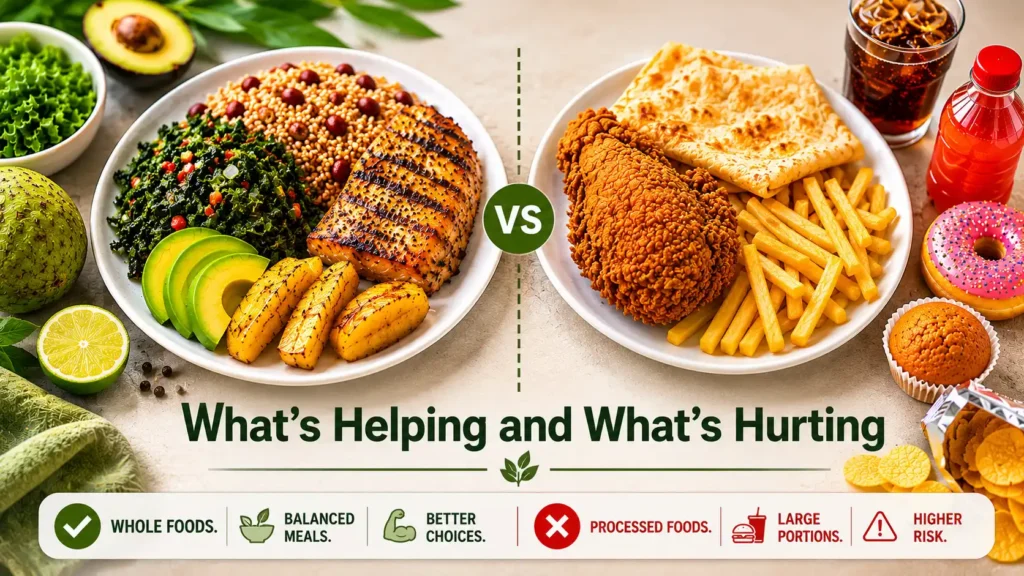
Caribbean Diet vs Blood Sugar: What’s Helping and What’s Hurting
Caribbean Diet vs Blood Sugar: What’s Helping and What’s Hurting
Series: The Blood Sugar Reality in Trinidad & Tobago
Many people believe they must give up the foods they grew up loving to protect their blood sugar. The truth is more encouraging. Most traditional Caribbean foods are not the problem. The challenge is how modern lifestyles have changed the way we eat them.
Reading time: 8–10 min • Updated:
You don’t have to abandon Caribbean food.
The goal isn’t to stop eating local foods. The goal is to understand which foods support blood sugar stability and which habits quietly work against it.
Across Trinidad & Tobago, food is more than nutrition. Food is family, culture, celebration, comfort, and tradition.
From Sunday lunch to doubles on the way to work, our food connects generations. Yet many people diagnosed with prediabetes or diabetes are immediately told they need to stop eating the foods they love.
That advice often creates frustration, guilt, and confusion.
The reality is more nuanced. Traditional Caribbean diets once supported active lifestyles. The issue today is not necessarily the food itself — it is the combination of larger portions, sugary drinks, reduced physical activity, stress, poor sleep, and highly processed convenience foods.
“Healthy living isn’t about perfection. It’s about making better choices more often.”
1) Traditional Caribbean Foods Are Not The Enemy
Ground provisions, beans, lentils, callaloo, ochro, fish, coconut, fresh fruits, and vegetables formed the foundation of many traditional Caribbean diets.
These foods provided fiber, nutrients, and slow-release energy that supported physically demanding work and active lifestyles.
The problem began when physical activity declined while calorie intake increased.
Key takeaway: The goal is not to reject Caribbean food. The goal is to rebuild balance around it.
Helpful resource
Learn how to build a healthier local plate without giving up traditional foods.
Many traditional meals were once balanced by physically demanding jobs and active lifestyles.
Today, we often consume larger portions while spending most of the day sitting.
A large plate of rice, macaroni pie, stew chicken, fried plantain, and sweet drinks may contain far more energy than the body uses in a typical modern day.
This does not mean those foods must disappear. It means portion size, meal frequency, and what surrounds the meal matter.
“The goal isn’t to eat less food. The goal is to eat the right balance of food.”
3) Liquid Sugar Is One Of The Biggest Problems
Soft drinks, sweet juices, energy drinks, flavored coffees, and sweetened teas can raise blood sugar faster than almost any food.
Many people focus on reducing rice while continuing to drink multiple sugary beverages each day.
For blood sugar control, replacing sweet drinks with water, unsweetened tea, or lower-sugar options is often one of the most impactful changes a person can make.
Simple action plan
Start with one drink swap per day. Replace one soft drink or sweet juice with water, unsweetened tea, or infused water.
“Your culture doesn’t have to change. Your strategy does.”
7) Know Your Numbers Before Guessing
Prediabetes and diabetes often develop silently. Many people feel fine while blood sugar levels slowly rise in the background.
If you have a family history of diabetes, frequent fatigue, strong cravings, belly weight, or energy crashes after meals, testing is a smarter choice than guessing.
Know Your Numbers
Start with an HbA1c test and a simple review. This is the fastest way to understand your current risk and next steps.
Testing comes first. Products come later if needed.
8) Local Support Available Through Pharmore
Awareness should lead to action. Pharmore connects education with practical support through testing, resources, services, and curated product categories.
Why Belly Fat and Blood Sugar Are Closely Connected
Belly fat is not only about appearance. It can be connected to insulin resistance, inflammation, hormones, and future diabetes risk.
FAQ
Do I have to stop eating rice?
Not necessarily. Portion size, frequency, meal balance, and what you eat with rice matter more than eliminating it completely.
Can I still eat roti or doubles?
Yes, but portion size, frequency, and overall meal balance matter. These foods may need to be eaten less often or balanced with more protein, vegetables, and movement.
What drink should I reduce first?
Sugary drinks are one of the best places to start because liquid sugar can raise blood sugar quickly.
What is the best first step?
Start with your numbers. HbA1c testing helps you understand your current blood sugar status before making major changes.
“Small changes to familiar meals can create big changes in long-term health.”
Medical Disclaimer: This article is intended for educational purposes only and should not replace professional medical advice, diagnosis, or treatment. Always consult a qualified healthcare professional regarding your individual circumstances.