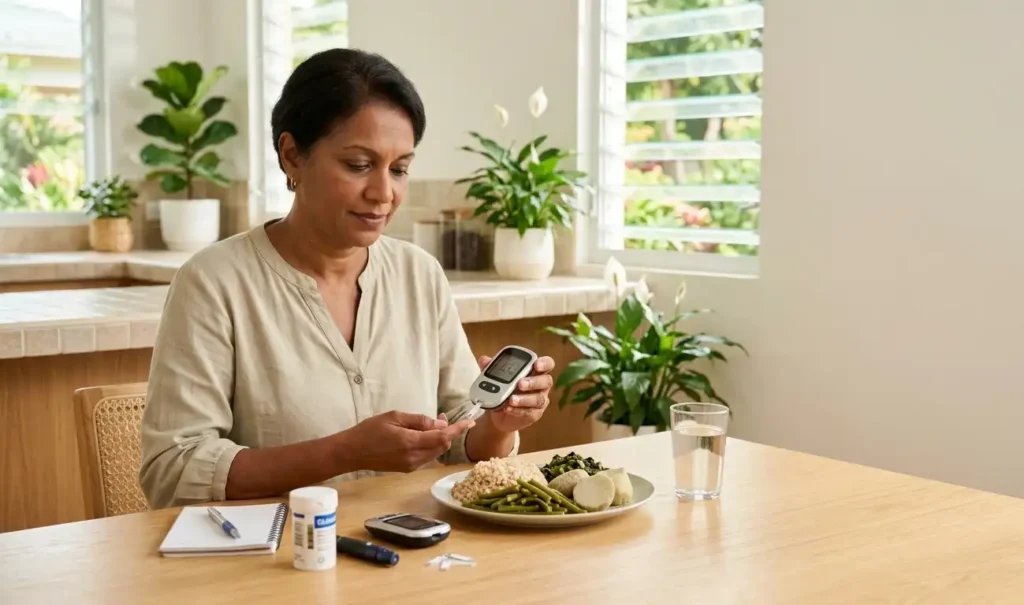
Series: The Blood Sugar Reality in Trinidad & Tobago
Diabetes didn’t appear overnight — it grew through decades of lifestyle shifts, stress, diet patterns, and late detection.
Here’s what’s driving it locally and what you can do early.
Reading time: 6–8 min • Updated:
Diabetes often develops silently for years.
Knowing your current blood sugar status can change the outcome. If it’s been a while since you checked, start with your numbers.
Tip: HbA1c gives a 2–3 month snapshot of average blood sugar.
Diabetes here isn’t just about sugar. It’s the result of culture + environment + modern lifestyle pressures
colliding with genetics. When those forces line up, blood sugar problems become almost inevitable — unless we intervene early.
1) Genetics Loads the Gun — Lifestyle Pulls the Trigger
Many Caribbean people carry a genetic predisposition to insulin resistance. That doesn’t mean diabetes is guaranteed;
it means our bodies are less forgiving of excess refined carbs, long periods of stress, and inactivity.
Key point: genetics increase risk — they don’t remove choic
Optional nutritional support
Support metabolic health alongside lifestyle changes (not a replacement for care).
2) The Caribbean Diet: Nourishing Roots, Modern Problems
Traditional foods were designed for hard physical work. Portions were smaller, sugar intake was lower,
and meals were balanced by movement. Today, those same foods are often eaten in larger portions, paired with sweet drinks,
and followed by sedentary routines.
Rice, roti, dumplings, doubles, sweet breads — none are “bad.” The issue is glycaemic load
(how much and how often), not cultural identity.
The shift that matters most: portion size + frequency, not total elimination.
Practical tool
Keep local foods — adjust the plate. Use this simple guide to reduce spikes.
3) Sugar Is Everywhere (Even Where You Don’t Expect It)
Soft drinks and juices are obvious, but sugar also hides in “healthy” cereals, flavored yogurts,
sauces and condiments, energy drinks, and sweet coffees.
Liquid sugar spikes blood glucose faster than almost anything else, overwhelming insulin response and
training the body toward resistance over time.
Explore support for steadier glucose spikes
For people tightening diet basics and wanting extra support.
If you’re on medication or have a diagnosis, speak with a clinician first.
4) Stress, Sleep & Work Patterns Quietly Raise Blood Sugar
Chronic stress raises cortisol, a hormone that pushes glucose into the bloodstream. In Trinidad & Tobago,
stress is often normalized — traffic, long hours, shift work, and financial pressure.
Add short sleep and insulin sensitivity drops further. Many people “eat well” yet still see rising blood sugar
because stress physiology is ignored.
We moved from walking and manual work to driving everywhere, desk jobs, and screen time.
Muscle is one of the body’s biggest glucose “sinks.” Less muscle activity means more sugar left in the blood.
Even modest daily movement improves insulin sensitivity — no gym obsession required.
Simple action plan
Start small and consistent. Build a routine that fits real life.
Prediabetes often has no obvious symptoms, or they’re brushed off as normal: fatigue, frequent thirst,
blurry vision, slow healing, increased urination.
Many people feel “fine” until damage is already underway. By the time diabetes is diagnosed, it may have been developing
for 5–10 years.
Early testing changes everything.
Know Your Numbers
Start with an HbA1c test and a simple review. This is the fastest way to understand your current risk and next steps.
Note: Testing comes first — products come later if needed.
7) The Good News: This Is Largely Preventable
Type 2 diabetes is one of the most preventable and reversible chronic conditions when caught early.
Small consistent changes beat extreme diets every time:
Medical note: This content is for education and is not a substitute for professional medical advice,
diagnosis, or treatment. If you have symptoms or are on medication, consult a qualified clinician.
FAQ
Can prediabetes be reversed?
In many cases, yes — especially when caught early. Testing (HbA1c), consistent lifestyle changes, and medical guidance matter most.
Do I need to stop eating rice or roti?
Not necessarily. The biggest drivers are portion size, frequency, what you pair with it (protein/fiber), plus overall activity and sleep.
Which test should I do first?
HbA1c is a strong starting point because it reflects average blood sugar over 2–3 months. A clinician can advise what fits your situation.